Focused demonstrations#
These runnable examples isolate a feature or modelling choice. For a paced first calculation, start with the introduction; for full comparisons and ensembles, use the worked examples. The user guide explains the models and their limitations.
Each page includes a downloadable Python script and notebook. Demonstrations execute during documentation builds, with unchanged results reused from the Sphinx-Gallery cache. Their size and runtime follow the physical question; a reduced calculation should not be treated as a convergence study.
Getting started#
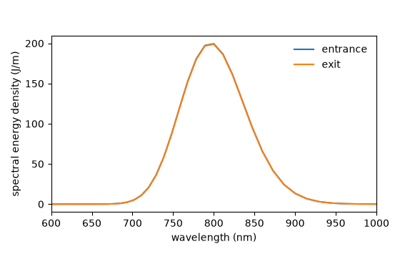
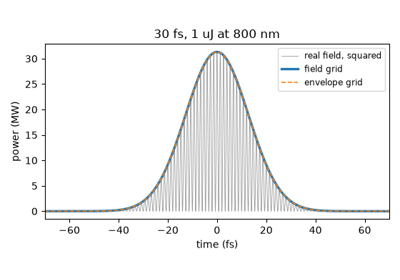
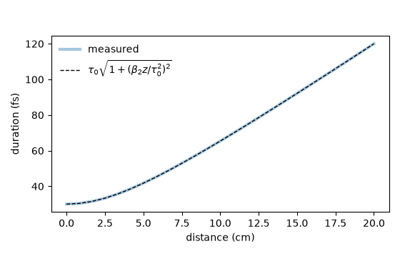
A first run, the pulses a run starts from, reading and plotting a saved run, the interactive namespace, scans over parameters, how to inspect and compare the material models a run takes from optmat, and how to tell whether a time window is big enough.
Gas-filled capillaries#
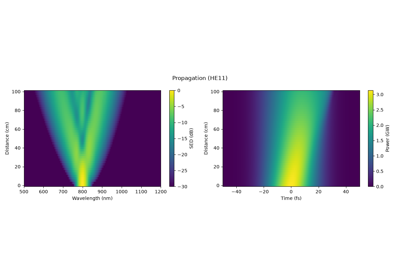
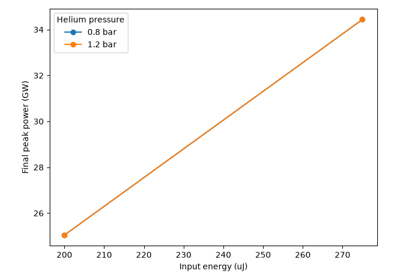
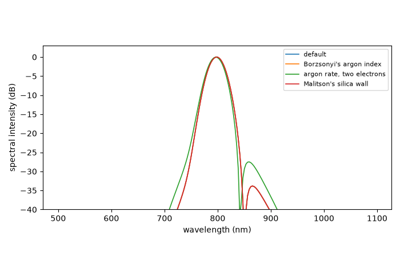
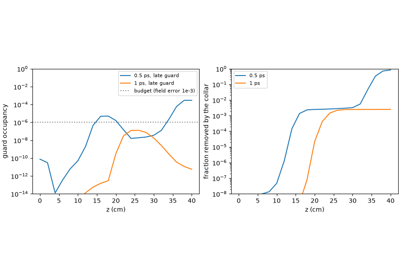
Gas flow and mixtures in hollow capillaries, envelope plasma and vector Raman responses, the coherent wall that couples a capillary’s modes (on a straight bore, on a taper, and with the vector (TE/TM) wall), the low-call integrators and a frequency-dependent Kerr response.
For the soliton and dispersive-wave lessons, begin with the Introduction.
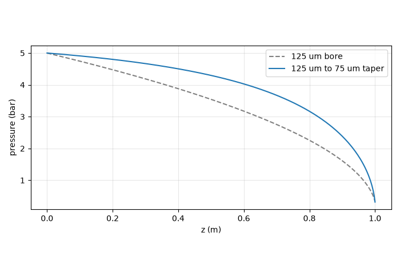
Gas flow in a hollow fibre: tapers, choked ends and the flow regime
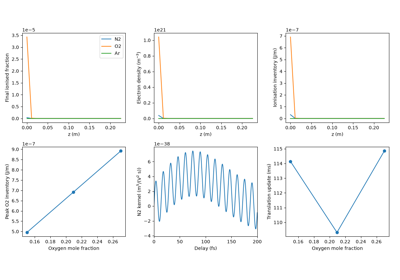
Separate nitrogen and oxygen ionisation in an air-filled capillary
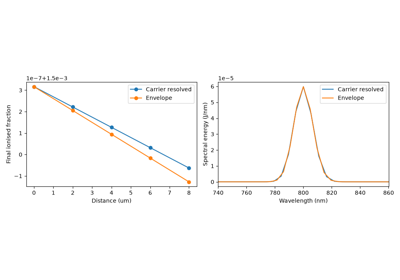
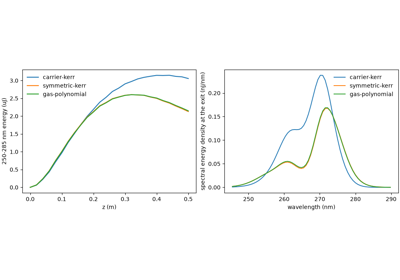
Compare a carrier-resolved pulse with envelope plasma
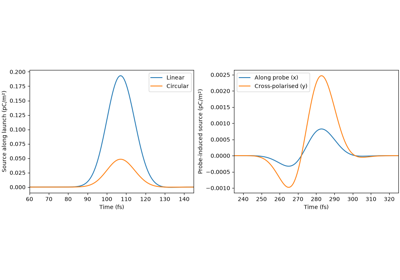
Follow vector Raman coherence with a delayed probe
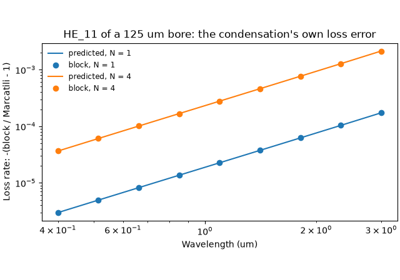
The coherent wall of a capillary, against the incoherent one
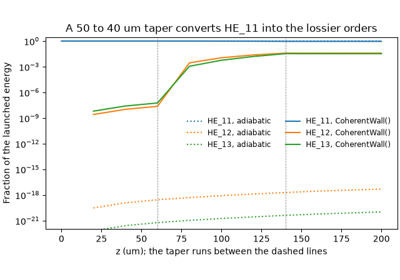
Mode conversion and loss in a taper with a coherent wall
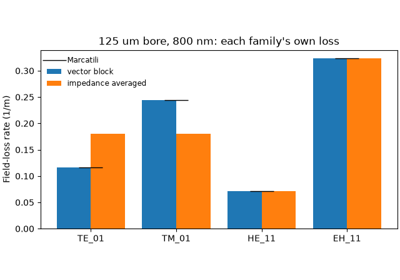
The vector wall: two impedances, two families, one conversion
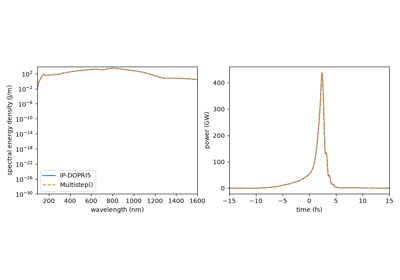
Waveguide models#
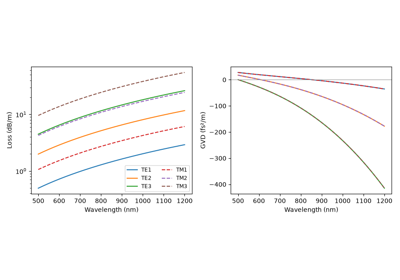
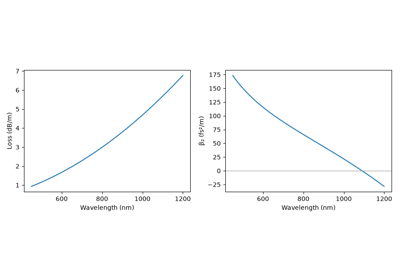
Antiresonant fibres, tabulated modes, step-index, graded-index and rectangular guides, the general modal route for guides that supply their own vector fields, a declared basis over a split pair, hollow planar guides per unit width, and a gas-filled hollow rectangular guide built from a supplied mode.
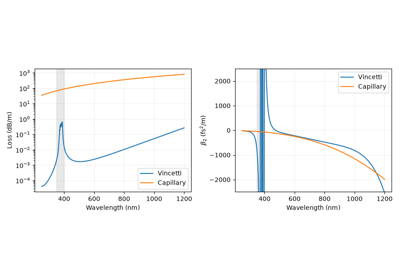
Propagate through a single-ring antiresonant fibre
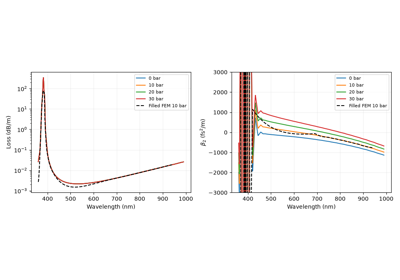
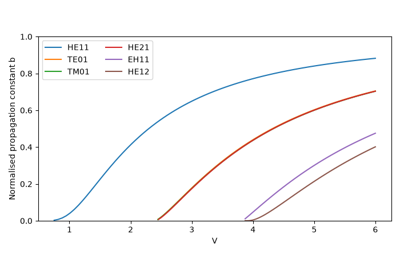
Explore exact step-index fibres and hollow rectangular guides
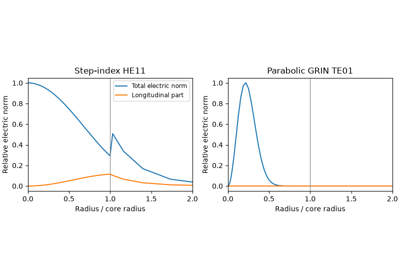
Inspect step-index and graded-index electric fields
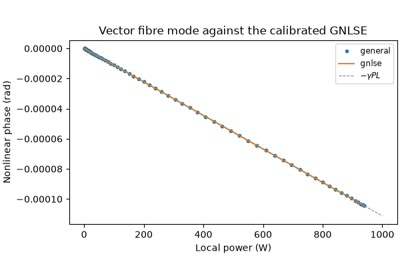
Propagate a vector fibre mode, and check it against the GNLSE
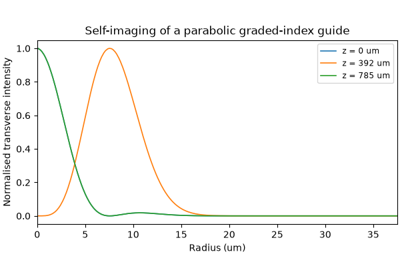
Self-imaging in a graded-index guide, and a launch declared as a field
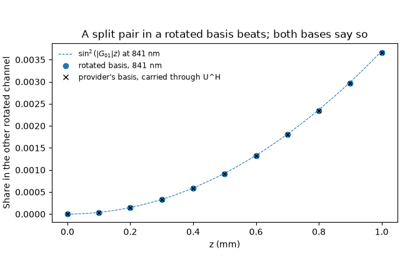
A declared basis of a split pair: two bases, one answer
Free space#
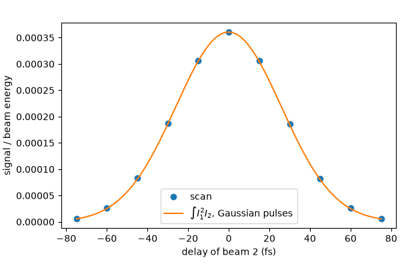
Beams in radial and Cartesian geometries, a self-focusing diagnostic, a line beam uniform in one direction, a planar guide resolved across its width, a weak band calibrated under the low-storage march, a four-wave-mixing delay scan run through one backend with statistics-only planes, far-field spectra collected through apertures in a mask plane, a beam prepared by Kerr self-focusing in a gas gap and coupled into a capillary, a transverse window sized with the boundary monitor, and a radial beam under the Kerr effect built from plain objects.
For the full filament and crossing-beam lessons, begin with the Introduction.
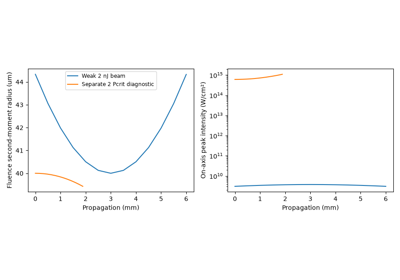
Radial diffraction and a separate self-focusing diagnostic
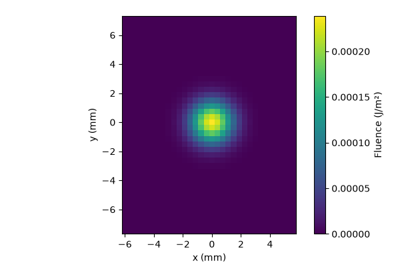
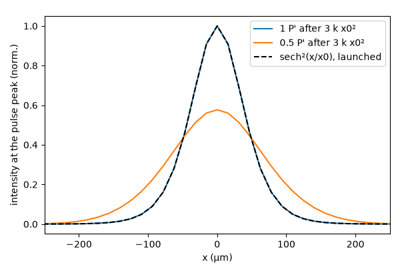
A line beam: diffraction and the (1+1)-D Kerr soliton
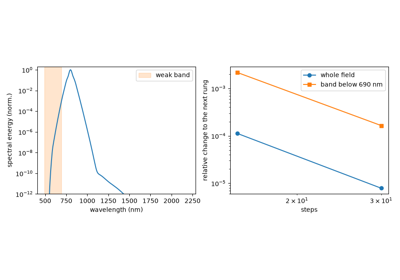
Calibrating a weak band with the low-storage march
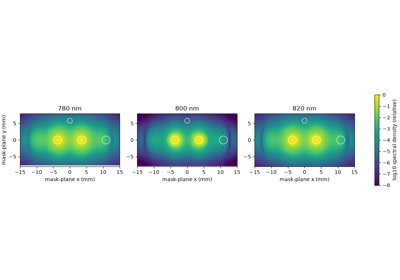
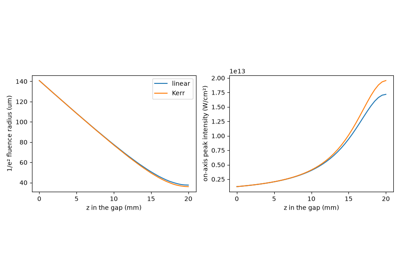
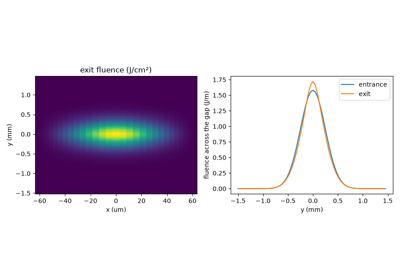
Nonlinear beam preparation and coupling into a capillary
Design and compression tools#
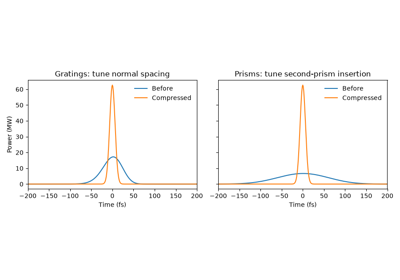
Grating and prism compressors: recovering the stage setting that compresses a chirped pulse.